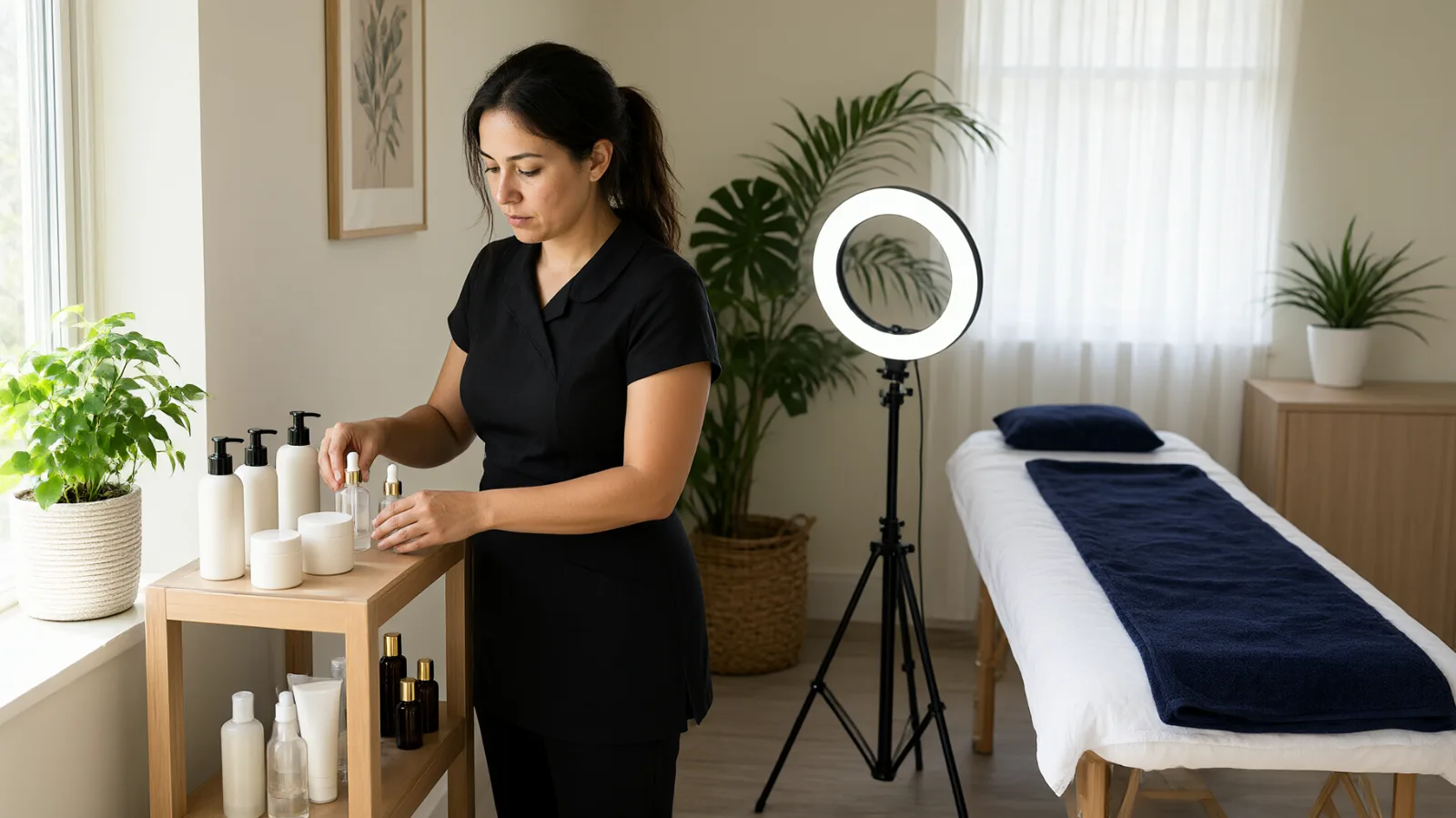
How to start a lash business from home
Everything you need to go from lash course to fully booked from your own home: training, insurance, patch tests, your room, the rules for working from home, prices and your first clients.
By Adam Rance, founder of Pulosa7 min readChecked
The short version
Take an accredited lash course, get insurance that lists lash extensions, set up a clean dedicated room and check your mortgage or tenancy allows clients. Patch test new clients, register with HMRC once you earn over £1,000, and take deposits.
Take an accredited lash course your insurer accepts, then get treatment and public liability insurance that lists lash extensions (and lifts, if you do them). Set up a clean, dedicated room, check your mortgage or tenancy and home insurance allow clients, and do a patch test before every new client’s first set. Register with HMRC once you earn over £1,000 a year, price from your real costs, and take deposits so long full sets don’t become empty afternoons.
Why so many lash techs start at home
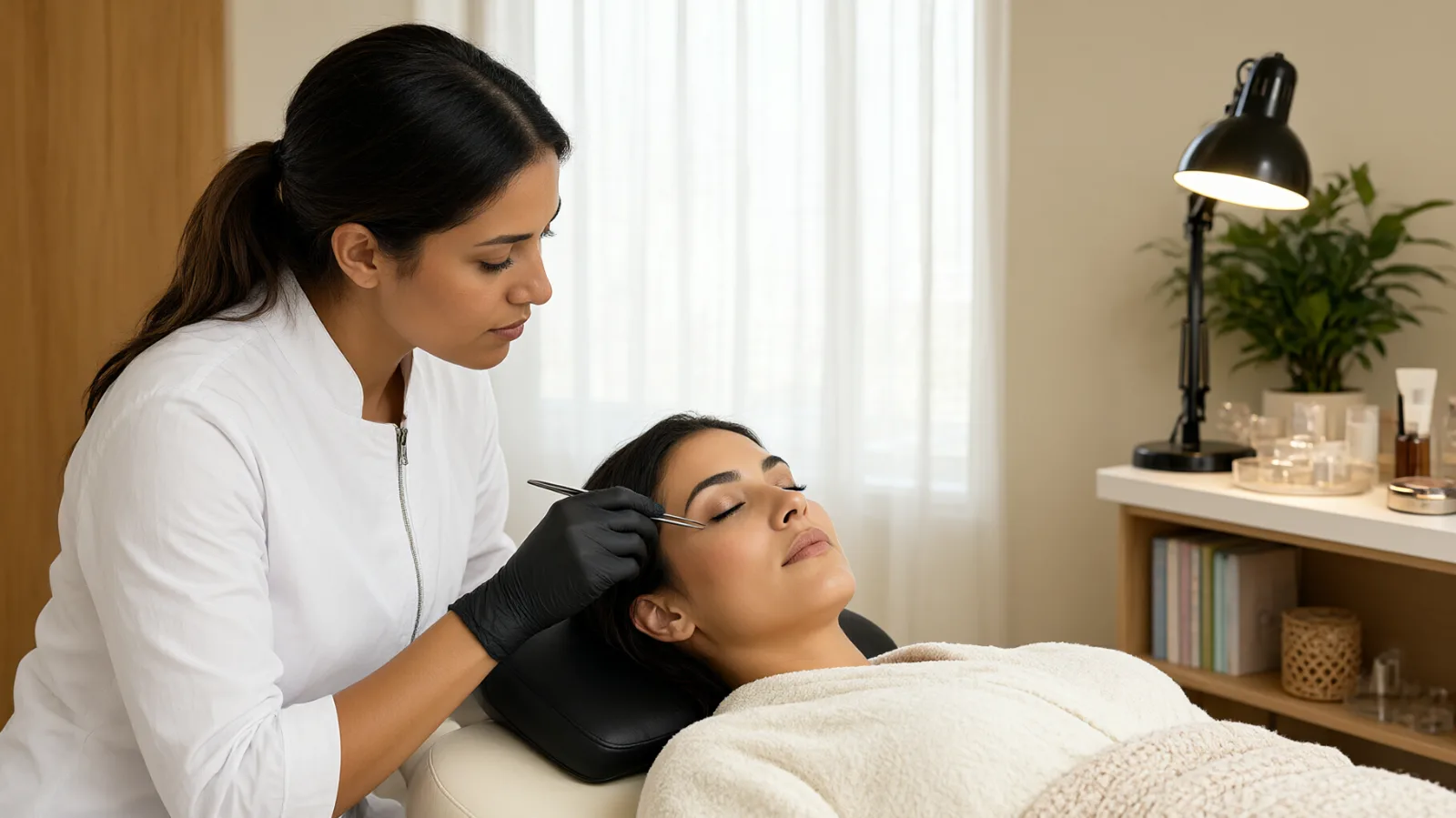
Lashes suit working from home better than almost any other treatment. The kit is compact, you don’t need running water at the bed, and clients lie still with their eyes closed for most of the appointment, so a calm room matters more than a shop front.
The costs are low too. With no rent, a lash business can be profitable within weeks rather than months. The trade-off is that you’re inviting clients into your home, so you need to think about privacy, safety and the rules that apply to running a business from a house or flat.
1. Get trained, properly
There’s no law in England that says you need a particular qualification to apply lash extensions. In practice, you can’t get insured without recognised training, and good training is what keeps clients’ eyes and natural lashes safe.
- Choose an accredited course and check with your insurer before you book that they accept it. Ask what’s included: live models, a kit, assessment and support afterwards.
- Start with classic lashes, then add volume or hybrid sets once you’re confident. Many techs also add lash lifts and brow treatments, which need their own training.
- Practise on models before charging full price. Keep photos (with permission) to build your portfolio.
Keep every certificate safe. Your insurer can ask for them, and clients increasingly ask to see them too.
2. Insurance that covers lashes at home
You need treatment liability (sometimes called malpractice) and public liability insurance before your first paying client. Make sure the policy lists every treatment you offer, such as classic, volume, lifts and tints, and that it covers you working from home.
Tell your home insurer too. Many home policies don’t cover business use or clients visiting, so a claim could be refused if they don’t know. Some will add business use for a small extra cost.
Our guide to beauty business insurance explains each type of cover.
3. Patch test every new client
Lash adhesive contains cyanoacrylate, which can cause allergic reactions, and a reaction near the eyes is distressing for the client and serious for you. A patch test before a client’s first set is standard practice, and most insurers require one. Many ask for it at least 24 to 48 hours before the appointment.
- 1Book the patch test as its own short appointment, or let clients collect a kit, depending on what your insurer allows.
- 2Record the date, the products used and the result on the client’s record.
- 3Repeat it if you change adhesive brand, or if the client has a reaction or hasn’t been for a long time. Check your insurer’s rules for how often.
- 4Don’t go ahead with a full set until the test date has passed and the client confirms no reaction.
4. Set up your room
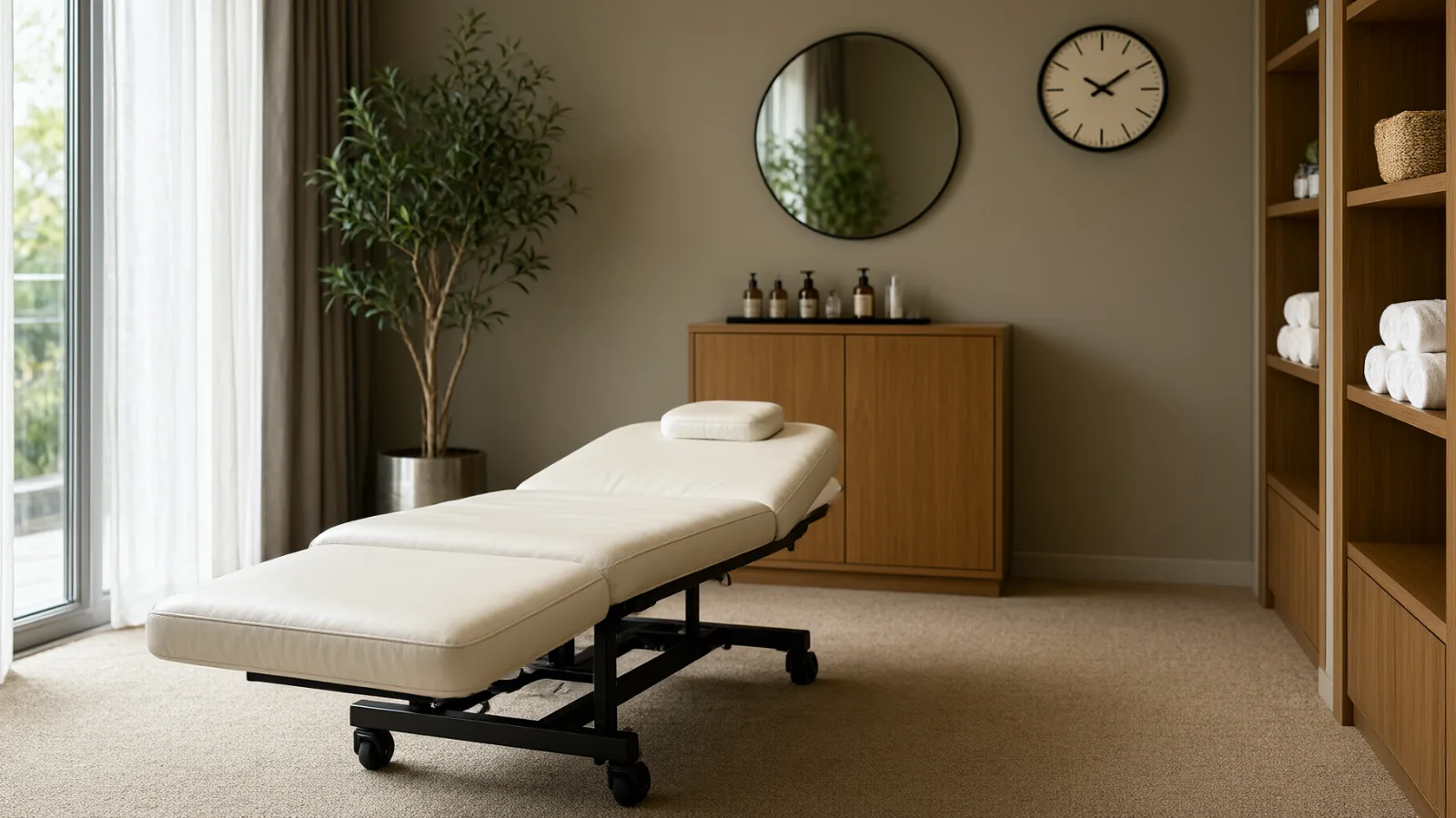
Your room should be a space you can keep clean and calm, and close to the door if possible so clients don’t walk through your home.
- A proper lash bed with a pillow that supports the neck. Clients may lie there for two hours.
- A good light, such as an LED lamp or ring light, and an adjustable stool so you can keep a good posture.
- Ventilation: adhesive fumes build up in a small room. Open a window, or use a small air purifier.
- Hygiene: wipe-clean surfaces, disposables for each client, a sharps-free set-up, and a routine for cleaning tweezers between clients.
- A humidity and temperature check: adhesive cures differently in hot, damp or cold rooms. A cheap hygrometer helps you get consistent retention.
- Somewhere for clients to wait and use the loo, and a plan for pets and family while clients are in.
5. The rules for working from home
Working from home is allowed in most cases, but there are a few things to check before you open.
- Mortgage or tenancy: some mortgages and most tenancies need permission to run a business from the property, especially with clients visiting. Ask your lender or landlord.
- Planning permission: you usually don’t need it if your home is still mainly a home. If clients come and go a lot, or you’re converting a garage or building a cabin, ask your council.
- Business rates: councils can charge business rates on part of a home that’s used for business, for example if clients visit or the room is only used for work. Small business rate relief can reduce the bill to nothing for many small spaces, so ask your council early. GOV.UK has a guide to business rates when you work at home (opens in a new tab).
- Neighbours and parking: a few clients a day rarely causes problems, but be considerate about parking and noise.
6. Register as self-employed
Once you earn more than £1,000 in a tax year from self-employment (the trading allowance), register with HMRC for Self Assessment by 5 October after that tax year ends. Keep records of what you take and what you spend from day one: lash trays, adhesive, pads, training and insurance are all business costs.
Free toolSelf-employed tax calculatorSee roughly how much tax and National Insurance you’d pay on your profit this year.7. Price your sets and infills
Lash appointments are long, so your price needs to reflect your time. Work out what a full set costs you in products, add your share of fixed costs (insurance, software, training) and a fair hourly rate, then compare with local techs at your level.
| Treatment | Typical length | Pricing tip |
|---|---|---|
| Classic full set | 1.5 to 2 hours | Your anchor price: everything else is priced around it |
| Hybrid or volume full set | 2 to 3 hours | Price for the extra time and skill, not just the extra lashes |
| Infill (2 to 3 weeks) | 45 to 75 minutes | Set a rule for when an infill becomes a new full set |
| Lash lift and tint | About 1 hour | A good, quicker option for clients who don’t want extensions |
| Removal | 15 to 30 minutes | Often free if they rebook a full set with you |
8. Bookings, deposits and no-shows
A no-show on a two-hour full set wipes out a big part of your day. Most lash techs take a deposit when the client books, with a clear cancellation policy they agree to. Online booking means clients can book at 11pm without messaging you, and reminders the day before cut forgotten appointments.
Free toolCancellation policy generatorWrite a fair deposit and cancellation policy, including patch test and infill rules.Our guide to how to stop no-shows goes into deposits and reminders in more detail.
9. Fill your diary
- 1Post your work on Instagram and TikTok, with clear close-ups in good light and your booking link in your bio. Lashes are a visual business.
- 2Set up a Google Business Profile. You can hide your address and show a service area instead, which suits a home business.
- 3Ask for reviews after every set, while the client’s still delighted.
- 4Rebook infills before they leave. Regular infill clients are the backbone of a lash business.
- 5Reward referrals with a small discount for both the client and their friend.
Questions people ask
Do I need a licence to do lashes from home?
Lash extensions don’t need a council licence in most of England, but check with your council: London boroughs and some other areas have their own rules for beauty treatments. Treatments like semi-permanent make-up do need council registration.
Do I need planning permission for a lash room at home?
Usually not, as long as your home is still mainly a home and clients don’t cause a nuisance. If you’re converting a garage, building a garden room or will have a lot of visitors, ask your council.
Will I have to pay business rates?
You might, if clients visit or the room is only used for business. Small business rate relief often brings the bill down to nothing for a small space, so ask your council what applies to you.
Do I need a patch test for lash extensions?
Most insurers require a patch test before a new client’s first set, usually at least 24 to 48 hours before. Check your policy’s exact rules and record every test.
How much can a lash tech earn from home?
It depends on your prices, how many clients you see and your costs. Because there’s no rent, home lash techs often keep more of what they take than salon-based techs. Work it out from your own numbers before you set prices.
Sources
Rules change, so we check these and update the guide. Always confirm anything legal with the source, your council or an adviser.