How to start a nail business in the UK
From your first gel course to a full column of regulars: training, insurance, safe products and ventilation, where to work, how to price your menu and how to get clients through the door.
By Adam Rance, founder of Pulosa6 min readChecked
The short version
Train for each nail system you’ll use, get insurance that lists them, and work with good ventilation and dust control. Start from home, mobile or a rented desk, check if your council licenses nails, and register with HMRC once you earn over £1,000.
Take accredited training for each system you’ll use (gel, BIAB, acrylic, extensions), and get treatment and public liability insurance that lists them. Use reputable products, ventilate well and control dust. Start from home, mobile or a rented desk to keep costs low, check whether your council needs a licence (many London boroughs license manicure), and register with HMRC once you earn over £1,000 a year. Price from your real costs and time, take deposits for long appointments, and book every client’s next infill before they leave.
1. Get trained in the systems you’ll offer
There’s no legal qualification needed to do nails in England, but you can’t get insured without recognised training, and clients can tell the difference. Most nail techs start with:
- Manicure and pedicure: often part of a Level 2 nail services or beauty therapy qualification.
- Gel polish: usually a short accredited course, often tied to a brand.
- Builder gel (BIAB) and structured manicures: hugely popular, and a good next step after gel polish.
- Acrylic or gel extensions: more advanced, with longer appointments and higher prices.
- Nail art: builds your portfolio and lets you charge more per set.
Some brands only insure or supply techs trained in their own system, so check before you buy a big kit.
2. Insurance
Get treatment liability and public liability insurance that names every service you offer. If you’re mobile, check you’re covered at clients’ homes. If you’re at home, tell your home insurer. And if you take on staff, employers’ liability insurance is a legal requirement.
3. Products, allergies and air
Gel and acrylic products contain chemicals that can cause allergies, both for clients and for you. Allergies to acrylates are a growing problem, and once someone’s allergic it’s usually for life.
- Use reputable, professional products from established suppliers, and the lamp made for your gel system so products cure fully.
- Keep product off the skin. Most allergies start from repeated skin contact with uncured gel or liquid.
- Ventilate. Open windows, and consider extraction at the desk to deal with vapours and dust.
- Control dust when filing, with extraction and a mask if needed.
- Avoid MMA liquid monomer for acrylics. Reputable suppliers sell EMA-based systems.
- Keep records of the products you use on each client, in case of a reaction.
Under health and safety law (COSHH), employers must assess the risks of hazardous products. Even if you work alone, it’s good practice to keep each product’s safety data sheet.
Your starter kit
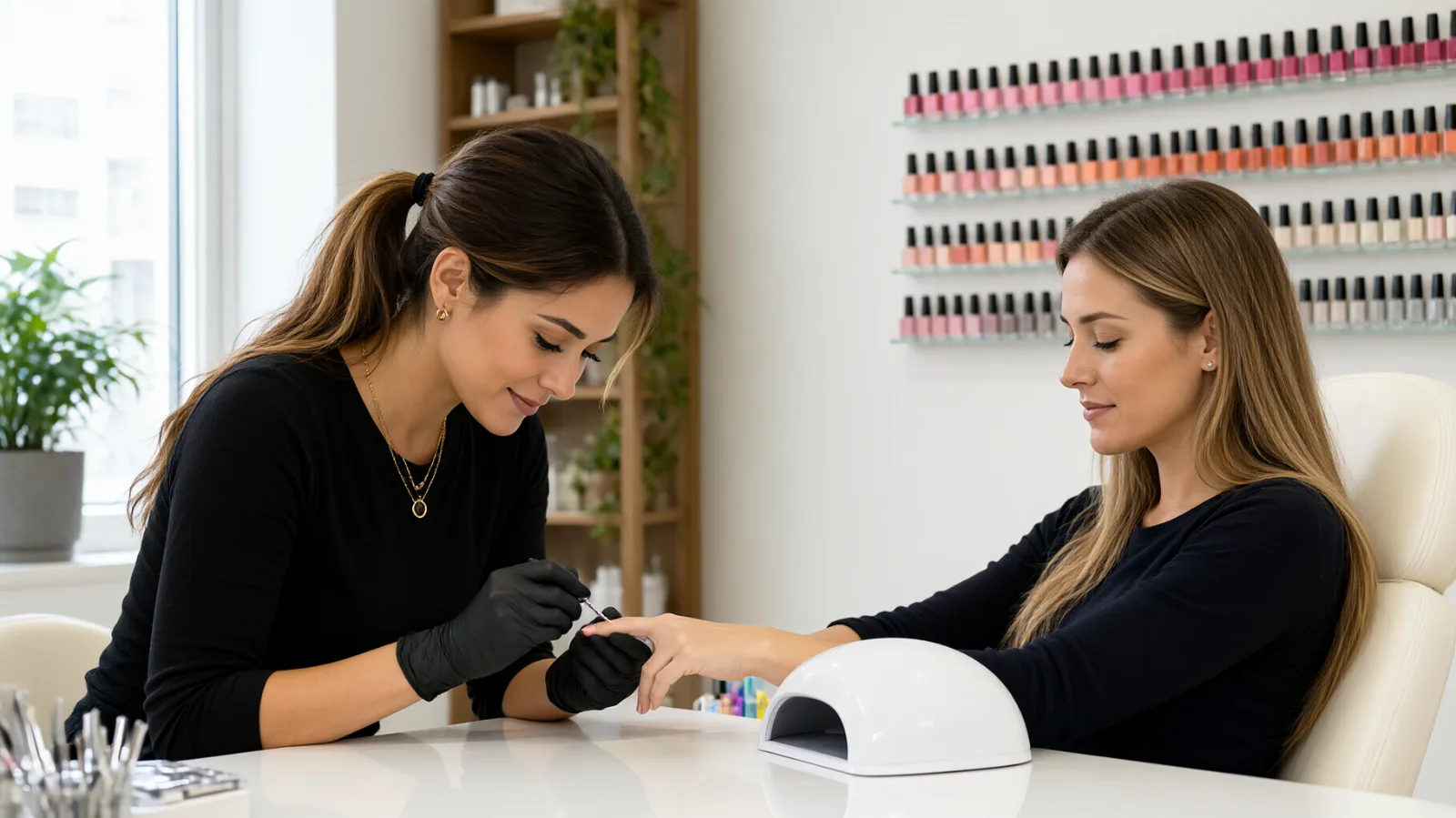
You don’t need everything at once. A sensible first kit for gel and BIAB covers:
- A nail desk with a wipe-clean top, a comfortable chair for you and one for the client, and a good desk lamp.
- A UV or LED lamp matched to the gel system you trained in.
- Files, buffers, a cuticle pusher and nippers, with enough sets to clean and disinfect between clients.
- Base, builder and top coats, and a starter range of colours (you don’t need hundreds; clients choose from what looks good on your social media).
- Lint-free wipes, cleanser, remover, foils and disposable towels.
- Desk extraction or good ventilation, and a mask for filing.
- A bin with a lid and a clear routine for disposables.
Buy from professional suppliers, keep receipts (they’re business costs that reduce your tax), and add an e-file, extensions and nail art once you have regular clients asking for them.
Hygiene clients notice
Clients judge a nail tech on cleanliness as much as on the finish. Clean and disinfect metal tools between every client, use new files and buffers for each client (or give them their own to keep), wipe down the desk after every appointment and wash your hands in front of the client. It’s good practice and it’s reassuring to watch.
Never work over broken, infected or inflamed skin or nails. Explain why, record it, and suggest they see a pharmacist or GP. A client will remember that you looked after them.
4. Where to work
| Option | Good for | Watch out for |
|---|---|---|
| From home | Lowest costs and flexible hours | Mortgage or tenancy permission, home insurance, business rates if clients visit |
| Mobile | Reaching clients who can’t travel, bridal and events | Travel time, lighting and ventilation in clients’ homes |
| Renting a desk or room | Walk-in clients and a professional setting | Weekly rent or a share of takings, and the salon’s rules |
| Your own nail bar | Growing a team | Rent, rates, fit-out, extraction and staff costs |
In London, many boroughs require a special treatment licence for premises offering manicures and pedicures. Elsewhere, check with your council before you open.
5. Register with HMRC
Most nail techs start as sole traders. If you earn more than £1,000 in a tax year, register for Self Assessment by 5 October after that tax year ends. Keep receipts for products, files, lamps, training and insurance: they reduce the tax you pay.
Free toolSelf-employed tax calculatorSee roughly how much tax and National Insurance you’d pay on your profit.6. Price your menu
Nail appointments vary hugely in length, so price by time and skill, not just by product. Work out your cost per set (gel, files, wipes, foils), add your share of fixed costs, and set an hourly rate you’re happy with.
| Service | Typical length | Pricing tip |
|---|---|---|
| Gel polish (hands) | 45 to 60 minutes | Your entry price: keep it simple |
| BIAB or builder gel | 60 to 90 minutes | Price infills lower to encourage regular visits |
| Extensions (gel or acrylic) | 1.5 to 2.5 hours | Charge by length and shape if they change your time |
| Removal | 15 to 30 minutes | Free with a new set, or a set fee on its own |
| Nail art | Varies | Price per nail or by tier (simple, detailed, full set) |
7. Bookings, deposits and infills
Regular infill clients are what make a nail business work. Book their next appointment before they leave, and send reminders so they turn up. For long sets, take a deposit when they book, with a clear policy they agree to.
Free toolNo-show cost calculatorSee what missed sets are costing you a year, and what deposits would save.8. Find your first clients
- 1Photograph every set in good natural light, and post them with your booking link.
- 2Set up a Google Business Profile with photos and your treatments.
- 3Offer friends and family a launch price for a short time, in return for photos and reviews.
- 4Ask every client for a Google review the same day.
- 5Partner locally: wedding planners, hairdressers and lash techs can all send clients your way.
Questions people ask
Do I need a qualification to be a nail technician in the UK?
Not by law in England, but you need recognised training for each service to get insured, and clients increasingly ask. Many start with a Level 2 nail qualification or accredited gel and BIAB courses.
Do I need a licence to do nails from home?
Usually not outside London, but check with your council. Many London boroughs need a special treatment licence for manicure and pedicure. You may also need permission from your mortgage lender or landlord.
How can I avoid gel allergies?
Keep uncured product off the skin, use reputable professional products with the right lamp so they cure fully, and ventilate well. Stop and record it if a client reacts.
How much does it cost to start a nail business?
Starting from home or as a mobile tech is the cheapest route: training, a starter kit, a lamp, insurance and a booking system. A nail bar with staff costs far more.
How do I get regular nail clients?
Rebook every client before they leave, send reminders, and make infills easy to book online. Consistent results and good photos do the rest.
Sources
Rules change, so we check these and update the guide. Always confirm anything legal with the source, your council or an adviser.
- GOV.UK: Register for Self Assessment as a sole trader (opens in a new tab)
- GOV.UK: Tax-free allowances on trading income (opens in a new tab)
- HSE: COSHH basics (opens in a new tab)
- GOV.UK: Business rates when you work at home (opens in a new tab)
- GOV.UK: Employers’ liability insurance (opens in a new tab)