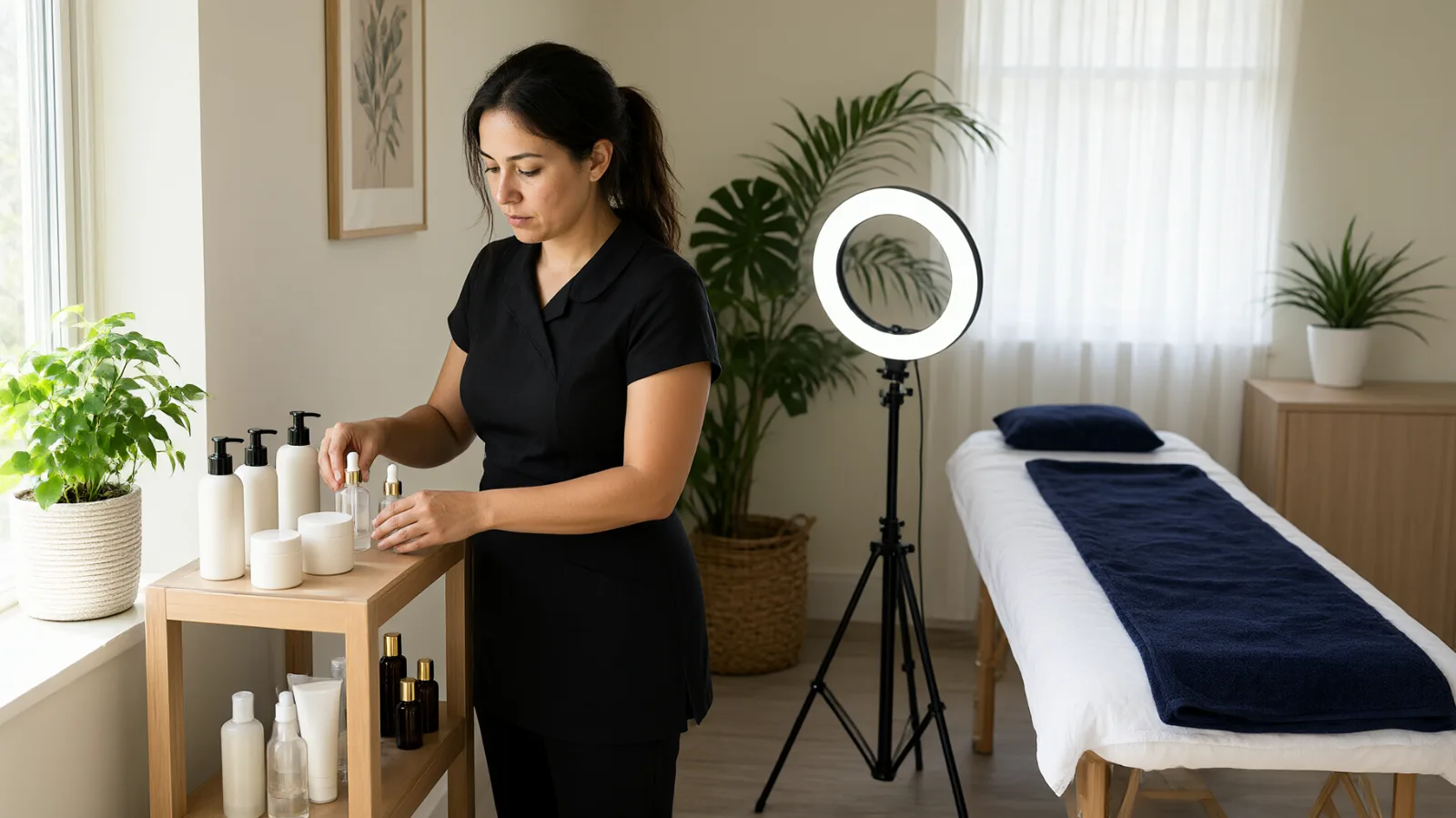
Renting a beauty room or chair: what to know
Renting a chair, desk or treatment room in someone else’s salon is a popular way to work for yourself without the cost of your own premises. Here’s how it works, what to agree before you start, and how to keep your clients your own.
By Adam Rance, founder of Pulosa6 min readChecked

The short version
Renting a chair or room usually means you’re self-employed inside someone else’s salon: you pay rent, set your own prices and hours, have your own insurance and keep your own clients. Agree rent, notice and client ownership in writing first.
When you rent a chair or room, you’re usually a self-employed business working inside someone else’s salon: you pay rent (a fixed weekly amount, a share of takings, or both), set your own prices and hours, bring your own insurance and keep your own clients. Agree everything in writing first: rent, notice, what’s included, who owns the client list and how bookings and payments work. Make sure the arrangement really is self-employment, because HMRC looks at how you work, not what the agreement calls you.
How renting works
You rent space in an existing salon, clinic, barbershop or studio: a chair, a nail desk, or a whole treatment room. You run your own small business from it. The salon owner gets steady income from space they might not fill, and you get a professional setting, passing trade and shared costs, without signing a lease or fitting out premises.
| Model | How it works | Suits |
|---|---|---|
| Fixed rent | A set amount each week or month, whatever you take | Busy renters with a full diary |
| Commission split | The salon keeps a percentage of what you take | People building a client base |
| Day rate | Pay for the days you use the space | Part-time or new renters |
| Mixed | A lower fixed rent plus a smaller percentage | A balance of the two |
Work out what each option would cost you at your expected takings, a quiet month and a busy one, before you agree.
Make sure you’re really self-employed
HMRC decides whether someone is employed or self-employed by how they actually work, not by what the agreement says. As a genuine self-employed renter, you’d usually:
- Set your own prices and choose your own hours.
- Bring or choose your own products and equipment.
- Find and keep your own clients, and take your own bookings.
- Take payments into your own account (or have the salon pass them on promptly).
- Have your own insurance, and be able to send someone else in your place in some arrangements.
If the salon sets your hours, your prices and your products and tells you how to work, you may really be an employee, with rights to holiday pay and the minimum wage, and the salon may owe tax and National Insurance. HMRC’s employment status guidance (opens in a new tab) and its check employment status tool can help both sides.
What to agree in writing
Most problems between renters and salon owners come from things nobody wrote down. Before you start, agree:
- 1Rent: how much, when it’s paid, and when it can go up.
- 2What’s included: electricity, water, laundry, Wi-Fi, reception, card machine, products, storage.
- 3Hours and access: when you can work, and whether you have keys.
- 4Notice: how much notice either side must give to end the arrangement.
- 5Clients: who owns the client list, and what happens to your clients if you leave.
- 6Bookings and payments: whose booking system and card machine you use, and how money reaches you.
- 7Marketing: can you use the salon’s name, photos and social media, and can they use yours?
- 8Rules: cleaning, uniforms, music, parking and how disputes are handled.
- 9Restrictions: any limits on working nearby after you leave. Keep these reasonable.
Insurance and licences
As a self-employed renter, you need your own treatment and public liability insurance. The salon’s policy normally covers the salon, not your work. Some salons ask to see your certificate before you start.
Check with the salon whether the premises already hold any council licence or registration you need for your treatments (for example, skin piercing registration or a London special treatment licence), and whether you need your own personal registration too.
Read what insurance do I need for a beauty business for the detail.
Your clients and their data
This is the part renters most often get wrong. If you’re running your own business, your clients’ details, consultation forms and history are your responsibility under UK GDPR: you’re the data controller.
- Keep your client records in your own system, not only in the salon’s.
- Pay the ICO data protection fee if it applies to you (£52 a year for most micro businesses).
- Agree in writing what happens to client data if you leave.
- If you share the salon’s booking system, make sure you can export your own clients.
Is renting worth it?
Compare your options honestly: what you’d keep as an employee, as a renter, and working from home or mobile. As a renter you pay rent and all your own costs, but you keep everything else and choose your prices. As an employee you have a steady wage, holiday pay and no business costs, but less control.
Free toolSelf-employed tax calculatorSee roughly what you’d keep after tax as a self-employed renter.Renting is a common step between working for someone else and opening your own salon. It lets you build a client base and a reputation before you take on premises.
If you’re the salon owner renting out space
Renting out a chair or room can cover your rent on quiet days. Treat renters as businesses, not staff: let them set their prices and hours, ask for their insurance, put the agreement in writing and keep their client data separate from yours. If you want control over how they work, employing them may be the better route.
Questions to ask before you sign
- 1How many other renters are there, and do any offer the same treatments as me?
- 2Does the salon send walk-ins or enquiries to renters, and how is that decided?
- 3Who pays for shared products, laundry and cleaning?
- 4Can I put my own branding, price list and certificates up?
- 5What happens if the salon closes or is sold?
- 6Can I talk to a current or past renter?
A good salon to rent in will happily answer all of these. Vague answers are a warning sign.
Leaving well
Give the notice you agreed, take your clients’ records with you if they’re yours, and tell your clients where you’re moving to. Update your booking link and Google profile the same day. If you’ve agreed a restriction on working nearby, stick to it, and if you think it’s unreasonable, get advice before you break it.
Setting up bookings and payments
Having your own booking system, payments and client records means your business moves with you if you leave the salon. Look for online booking on your own link, deposits paid into your own account, consent forms and a client list you can export.
For the bigger picture, read what booking software do I need.
Questions people ask
How much does it cost to rent a beauty room or chair?
It varies widely by location and what’s included. Rent may be a fixed weekly amount, a percentage of takings, a day rate, or a mix. Compare what each would cost you at your expected takings.
Am I self-employed if I rent a chair?
Usually, if you set your own prices and hours, use your own products, find your own clients and have your own insurance. HMRC looks at how you actually work, not what the agreement calls you.
Do I need my own insurance if I rent a room?
Yes. You need your own treatment and public liability insurance. The salon’s insurance normally doesn’t cover your work.
Who owns the clients when you rent a chair?
It depends on what you agree, which is why it should be in writing. If you’re a genuinely self-employed renter running your own business, your clients and their data are normally yours.
Can I use my own booking system when renting a chair?
Usually, yes, and it’s a good idea: your clients, bookings and payments stay with you if you move. Agree it with the salon first.
Sources
Rules change, so we check these and update the guide. Always confirm anything legal with the source, your council or an adviser.