How to start a beauty business on a low budget
You don’t need a shop front, a big loan or a full menu to start a beauty business. Here’s what you genuinely need to spend money on, what can wait, and how to grow from a spare room or a kit bag without cutting corners that matter.
By Adam Rance, founder of Pulosa6 min readChecked
The short version
Spend first on training, insurance, good products and hygiene. Start from home, mobile or a room rented by the day, with a short treatment menu, free marketing (Google Business Profile, Instagram) and low-cost booking software with deposits.
Spend first on the things that keep clients safe and you protected: proper training, insurance, good products and hygiene. Start from home, mobile or a rented room by the day, with a short menu of treatments that need little equipment. Use free tools for your name, price list and policies, set up a free Google Business Profile and Instagram, and use low-cost booking software with deposits so no-shows don’t eat your income. Reinvest your first profits in the next treatment or piece of kit.
What you should never cut corners on
A small budget means choosing carefully, not doing things cheaply. These are the things worth paying for from day one:
- Training your insurer accepts, for every treatment.
- Insurance: treatment and public liability that lists everything you do.
- Professional products from proper suppliers. Cheap adhesives, tints and gels cause reactions and poor results.
- Hygiene: disposables, cleaning and disinfecting products, clean towels.
- Any council registration your treatments need.
Everything else can start simple and improve as you grow.
1. Choose low-cost treatments to start
| Treatment | Why it’s low cost to start |
|---|---|
| Brow shaping and tinting | Short courses, small kit, quick appointments |
| Gel polish manicures | A lamp, a starter range of colours and files |
| Lash lifts | One course and a small kit, no lash bed essential at first |
| Waxing | A heater, wax and strips; a couch you can buy second-hand |
| Make-up | A kit you build over time, often mobile |
Treatments that need machines, such as lasers, microneedling or electrical facials, cost far more to start. Add them once the business is paying for itself.
2. Start without premises
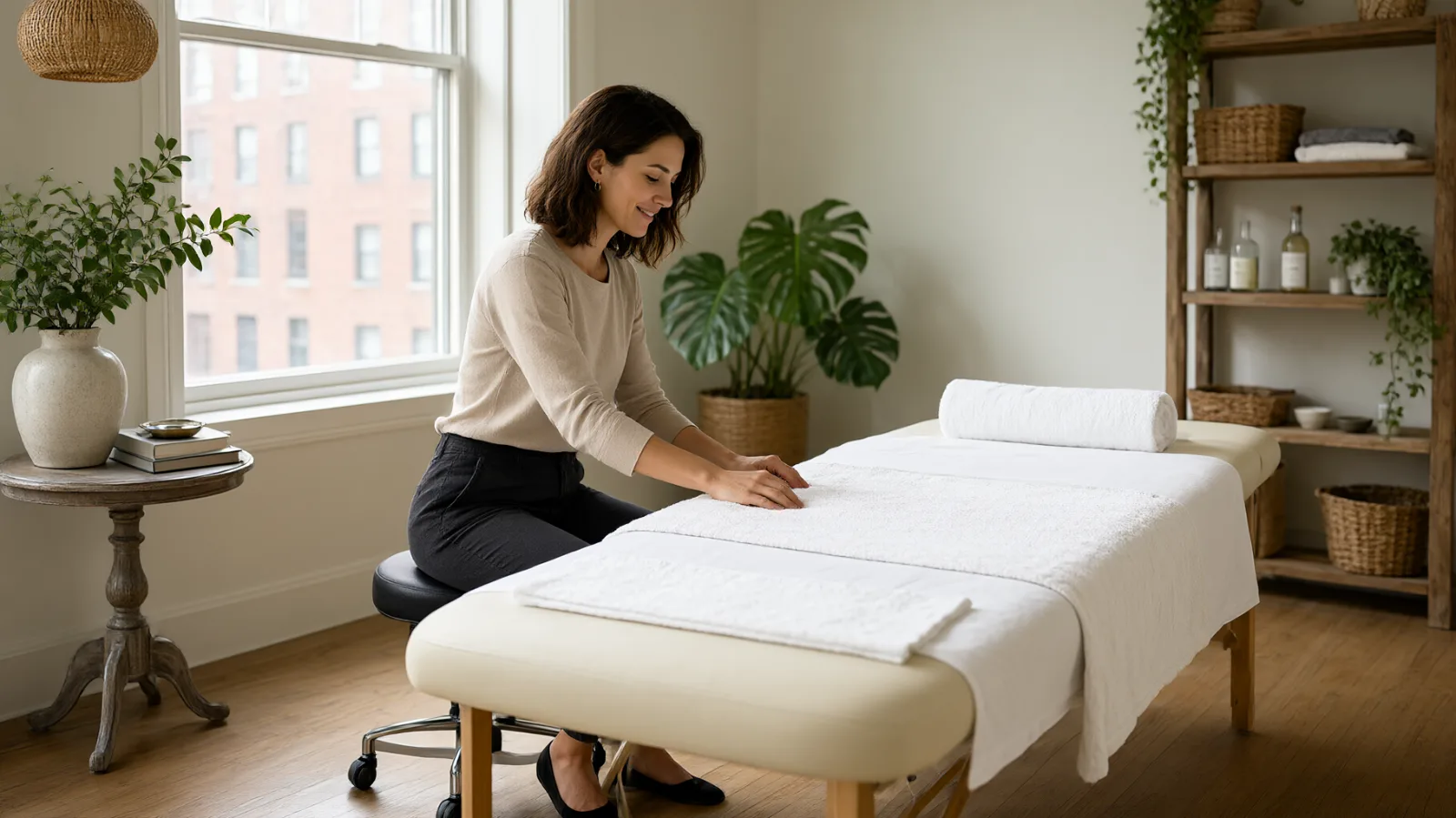
- From home: a spare room or a corner you can keep clean and private. Check your mortgage or tenancy and home insurance first.
- Mobile: your kit goes to clients. No rent at all, but you’ll need business use on your car insurance.
- Renting by the day: some salons rent rooms or chairs for single days, which is cheaper than a weekly rent while you build up.
See renting a room or chair and becoming a mobile beautician.
3. Buy kit wisely
- Second-hand furniture such as couches, trolleys and stools is fine if it’s clean, sturdy and wipeable.
- Never second-hand: anything that touches skin or eyes, such as tools you can’t sterilise, opened products and disposables.
- Course kits often include enough to start. Use them before buying more.
- Buy colours and products clients actually ask for, not the whole range.
- Keep receipts: kit and products are business expenses that reduce your tax.
4. Use free tools and free marketing
A lot of what new businesses pay for can be done free:
Free toolBusiness name and logo generatorFind a business name, then check it’s free on social media and Google.Free toolPrice list makerMake a professional price list without paying a designer.Free toolCancellation policy generatorWrite a fair deposit and cancellation policy in minutes.Free toolConsent form generatorDraft consent forms for your treatments, ready to check with your insurer.For marketing, a Google Business Profile, Instagram, TikTok, local Facebook groups and asking every client for a review cost nothing but time. Read how to get your first 50 clients.
5. A simple start-up budget
Write down every cost before you spend anything, split into one-off and monthly:
| One-off costs | Monthly costs |
|---|---|
| Training and certificates | Insurance (or yearly, divided by 12) |
| Starter kit and furniture | Products and disposables |
| Council registration, if needed | Booking software |
| Business cards or signage | Phone and internet share |
| ICO data protection fee (yearly) | Room or chair rent, if any |
Then work out how many clients a week you need to cover the monthly costs. That number is your first target.
6. Grow step by step
- 1Start with two or three treatments you’re confident in.
- 2Fill your diary and build reviews.
- 3Put a set amount from every month’s profit aside for growth.
- 4Add one new treatment at a time, ideally one existing clients are asking for.
- 5Upgrade kit when it’s holding you back, not before.
- 6Raise prices as demand grows.
7. Protect your income
On a tight budget, a few no-shows can wipe out a week’s profit. Take deposits when clients book, send reminders, and have a clear cancellation policy. Keep business money separate from personal money, and set aside money for tax every month.
Free toolNo-show cost calculatorSee how much no-shows could cost you a year, and what a deposit would protect.Register with HMRC once you earn over £1,000 a year. See beauty business tax in your first year.
Where the money could come from
- Savings, the simplest option, with no repayments.
- A Start Up Loan, a government-backed personal loan for new businesses with free mentoring.
- Family, with the terms agreed in writing.
- Keeping your job part time while you build the business.
Avoid putting start-up costs on high-interest credit cards. If you need to borrow, borrow only for things that will earn money, like training and essential kit.
An example start-up list
Here’s what a home-based brow and lash lift business might spend money on first, in order of priority. Exact costs vary a lot by area and supplier, so price your own list before you buy:
- 1Accredited training for brows and lash lifts.
- 2Insurance that lists both treatments.
- 3A starter kit of professional products and disposables.
- 4A second-hand couch or reclining chair, and a good lamp.
- 5Cleaning and hygiene supplies.
- 6The ICO data protection fee.
- 7Booking software with deposits and consent forms.
Leave signage, printed menus, branded uniforms and a custom website until the business is paying for itself.
Setting up bookings and payments
Low-cost doesn’t have to mean messy. A booking system that includes a simple website, online booking, deposits and consent forms can replace several separate costs at once. Watch out for “free” apps that charge commission or add a fee for your clients: read free vs paid booking software.
Questions people ask
Is a Start Up Loan worth it for a beauty business?
It can be if you need equipment or training you can’t fund yourself. It’s a personal loan you must repay, with free mentoring, so borrow only for things that will earn money.
Can I start a beauty business with no money?
You’ll need some money for training, insurance and products, but you can keep costs very low by starting from home or mobile, with a short menu, second-hand furniture and free marketing.
What’s the cheapest beauty business to start?
Treatments with short courses and small kits, such as brows, gel nails, lash lifts and waxing, are usually the cheapest to start, especially from home or mobile.
What should I not cut corners on?
Training your insurer accepts, insurance, professional products, hygiene and any council registration your treatments need.
Do I need a website to start?
Not necessarily, but a simple website or booking page with your treatments and prices helps clients and Google find you. Many booking systems include one.
Can I buy second-hand beauty equipment?
Furniture such as couches and trolleys is fine if it’s clean and sturdy. Don’t buy second-hand products, disposables or tools that can’t be properly sterilised.
Sources
Rules change, so we check these and update the guide. Always confirm anything legal with the source, your council or an adviser.